
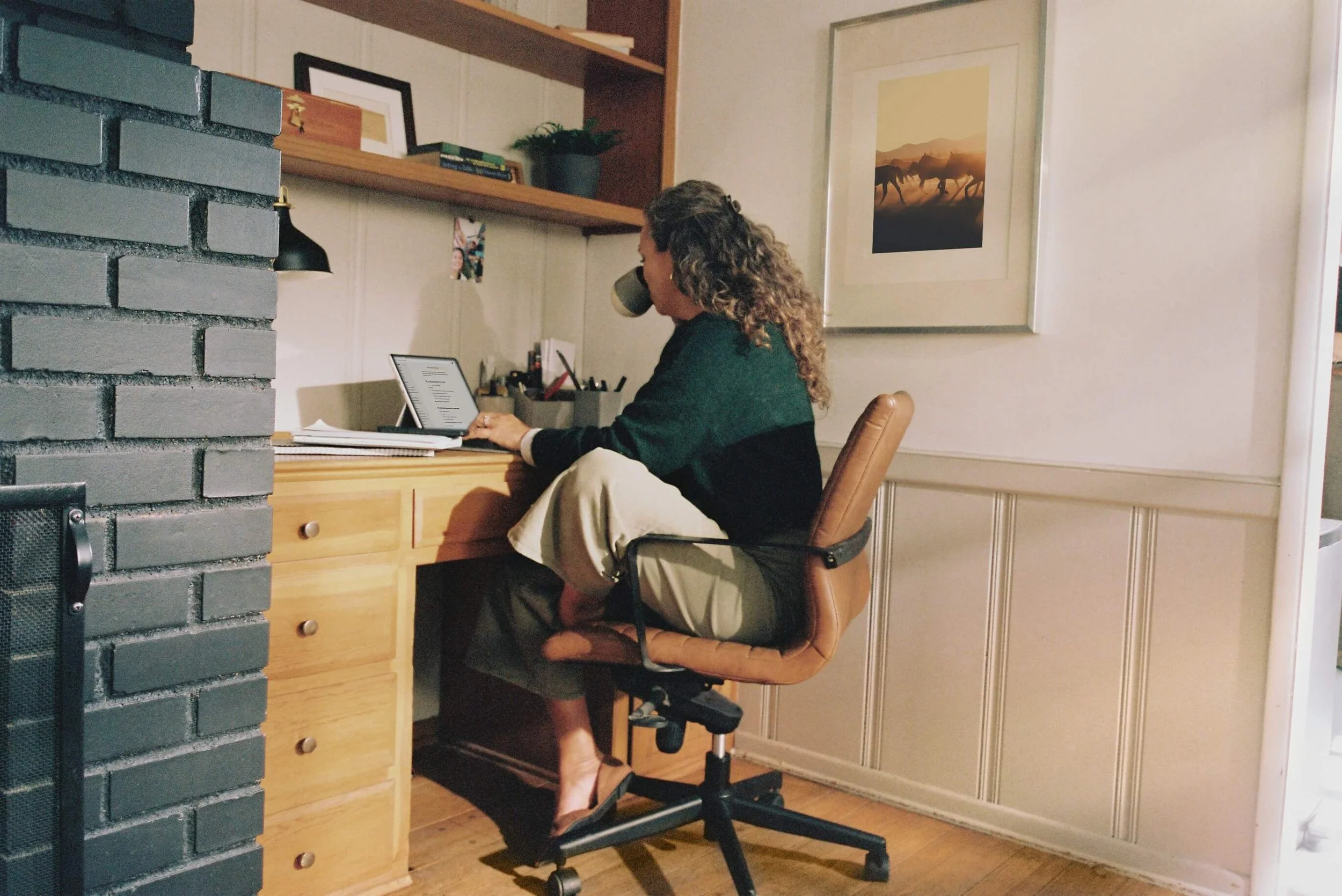
If you spend long hours in a desk chair all day, you probably have experienced tension in the neck and shoulders or even pain in the back.
But one area of the body that often gets overlooked is the pelvis. Pelvic pain is common in desk workers but is not openly discussed because of the area people are experiencing discomfort. But just know, you are not alone and it is more common than you would think.
So why does pain happen with prolonged sitting? Our bodies are built and meant to move. When the body sits for long periods, several things happen as a result.
Limited spinal movement and posture changes. The spine typically stays in the same position for long stretches, without much movement in different directions. This creates stress on the joints and spinal muscles which could affect posture long term.
Direct compression and nerve irritation. Prolonged sitting with direct pressure on the pelvic floor can contribute to numbness, tingling, and aching, because it restricts movement of the pudendal nerve as it passes through the pelvic floor. The tailbone is also compressed for long periods, which can create tailbone pain.
Tucked pelvis. Many chairs aren't designed to support healthy movement of the pelvic girdle, and many people find the "tucked" position more comfortable. Staying in this position for long periods can create tension in the pelvic floor muscles.
Hip flexor tension. Sitting shortens the hip flexor muscles, which is why this muscle group tends to become chronically tight. This can contribute to pain and difficulty with sit-to-stand transfers, since the hip flexors haven't moved in a while.
Impact on blood circulation and lymph movement. Movement is what helps blood and lymph fluid move optimally through the body, especially through the pelvis and legs. Sitting for long periods of time can impact poor blood circulation and lymph movement creating discomfort, tension, increasing swelling, heaviness, and a sense of congestion in the pelvis.
Breath holding and core bracing. While working, people tend to focus intensely on the task in front of them. This can create prolonged patterns of breath holding and unconscious tension in the core. The diaphragm, core, and pelvic floor work together, so if one is restricted, the others are affected too.
Pelvic pain from sitting does not present itself right away. Sometimes this can appear in other ways.
An ache or pressure in the back or pelvis after a long day.
Soreness or tension in the hips that may radiate to the groin, tailbone, or other regions of the body.
Discomfort may ease after standing and moving around after a while.
Numbness, tingling, burning around the sit-bone, back, and hip areas.
Shifts in bowel or bladder function like increased frequency and urgency.
Changes in sexual function can be present after a long day of sitting.
The good news is there's a lot you can do to help.
Move on a schedule rather than feeling. Set a timer on your phone to remind you to move every 30–45 minutes. Even if you don't have time to stand up and walk around the building, you can still get out of your chair and do a couple of movements or stretches before returning to work. You could even set reminders to check in and adjust posture.
Modify your work station. Requesting a different work chair that feels more comfortable for your body is a good start, but even asking your employer for a standing desk can be a great way to change up your position throughout the day. Walking treadmill desks are also becoming more common for people who work from home.
Remember to breathe. It sounds simple but is often forgotten. Set a timer a couple of times each hour to remind yourself to breathe and take five diaphragmatic breaths. This will decrease the muscle guarding and tension that can develop throughout the workday. Even a quick reminder to "let the belly go" can go a long way
See a Pelvic floor PT if pain persists. Pelvic floor PTs can ask the right questions and assess your body to determine which regions have been impacted most by prolonged sitting, then provide an individualized program of exercises that fits your work schedule and environment.
Sitting jobs are not going away and neither is the need to sit while you work. But providing regular movement during a work day can make a difference in your pain as well as your long term health. Reminding yourself to incorporate regular intervals of small movements throughout the day can improve your sitting discomfort and avoid turning it into a chronic problem. Reach out to a pelvic floor PT to receive treatment and discuss strategies to improve your pelvic pain with desk jobs.
At Pelvic Symphony PT in the Denver Tech Center, Dr. Chelsea Speegle, PT, DPT, PCES can assess which areas of your body have been most affected by prolonged sitting and build an individualized treatment plan that fits your work schedule. Call 720.814.0126 or email info@pelvicsymphonypt.com to schedule your evaluation. No referral is needed.