
The Beginnings of Pelvic Floor Exercises
Pelvic floor contraction exercises, also known as Kegels, were introduced by Arnold Kegel in the 1940s. During this time, options and education around women’s postpartum pelvic floor health were limited. Arnold Kegel published research demonstrating how pelvic floor muscle training could be beneficial for countering urinary symptoms such as leakage and prolapse. Since then, Kegels are a widely known exercise prescribed by the majority of medical providers for anyone who is experiencing any type of pelvic floor-related symptoms.
Why Pelvic Floor Exercises are Progressing
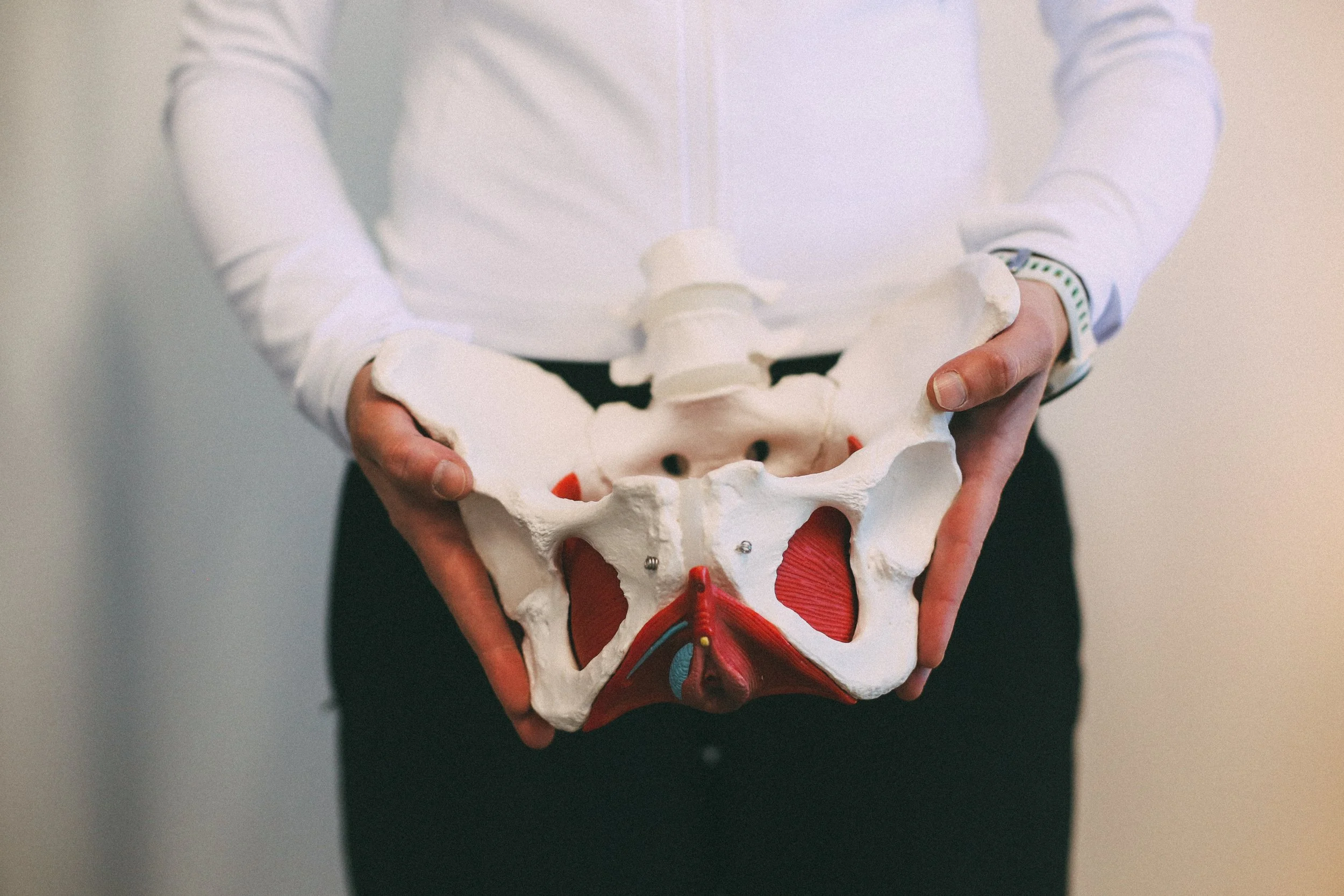
While we can thank Arnold Kegel for finding a non-invasive surgical solution for pelvic floor health, unfortunately, the pelvic floor is more complex than that. The pelvic floor is located on the bottom aspect of the pelvis; it not only serves functions for bladder, bowel, and sexual health but also works as a stabilizer and manages pressure in the body. The pelvic floor muscles work to both contract and relax. Just like bicep muscles curl the arm up and down, so should the pelvic floor move up and down. When patients and medical providers identify symptoms such as leakage and prolapse, most assume these are taking place due to weakness of the pelvic floor – hence, Kegel exercises are seen as the best treatment. BUT… what if tightness in the pelvic floor is creating these symptoms?
Understanding Alternative Solutions to Pelvic Floor Symptoms
Let’s walk through a couple of examples of ways in which pelvic floor tension can create pelvic health issues, specifically urinary leakage and prolapse.
Urinary Leakage
Imagine doing over 100 bicep curls throughout the day or holding a bicep curl in the shortened, curled up position for a long period of time without allowing your arm to straighten. Your bicep would likely feel tight, sore, and even tired. Then imagine someone comes over and places a 100 pound dumbbell in your hand. Do you think you’ll be able to hold it? Probably not –your muscles are fatigued and have no control. Now consider the pelvic floor: if you do 100 Kegels or your pelvic floor is holding on to tension all day long then all of sudden you jump, sneeze, or cough, this would be equivalent to handing the 100 pound weight to the pelvic floor. As with other muscles, the pelvic floor muscles are subject to fatigue and may lose control, causing urinary leakage.
Prolapse
Prolapse is essentially organs, such as the bladder, uterus, or rectum, descending down into the vaginal canal. While prolapse can be attributed to numerous contributing factors–such as poor pressure management, posture, connective tissue, hormones, and genetics–pelvic floor weakness is a common assumption, so Kegels are commonly prescribed. But what about tension? Imagine wrapping your hands around the center of an inflated balloon and squeezing. What would happen? The air in the balloon must go somewhere so the balloon will protrude on either side of your fist rather than the fist consuming the entire balloon. If you stand all day long with a present prolapse and undiagnosed pelvic floor tension, it is likely starting to squeeze whichever organ that has been descending down. In this case, Kegels would likely cause the prolapse symptoms to feel worse. At this point, the Kegel wouldn’t be lifting the organs but rather squeezing around it and aggravating the issue.
Involving Pelvic Floor Physical Therapy for Exercise Prescription
Kegels have often been prescribed with good intentions, and they may even be appropriate in some cases, the pelvic floor is significantly more complex than it was considered to be in the 1940s. A pelvic floor physical therapist is trained to assess muscle tension and coordination of the pelvic floor to determine what is needed, whether relaxation or strengthening. That being said, many pelvic floor issues are not resolved just by assessment and treatment of pelvic floor muscles alone. As pelvic floor PT’s, we need to be assessing posture, hip and core strength, breathing mechanics, pressure management, the pelvic girdle, and movement strategies. The biggest takeaway is that Kegel exercises are not the end all solution and Physical Therapists specializing in pelvic floor are able to determine what is driving your symptoms, and work with you to come up with an achievable, coordinated approach to getting you healthy again.
Pelvic Floor Health Physical Therapy in Denver
A pelvic floor exam is just one component of a comprehensive approach to pelvic floor health in both men and women. At Pelvic Symphony PT in the Denver Tech Center, Dr. Chelsea Speegle, PT, DPT, PCES provides individualized pelvic floor physical therapy to help men and women improve bladder and bowel issues, prolapse, pelvic pain, and optimize pelvic health. Schedule an appointment to learn more.